Inviting the Devil to Dinner: Louisiana Hatchery Dystopia
There are several videos doing the rounds on social media lately about stocking redfish into

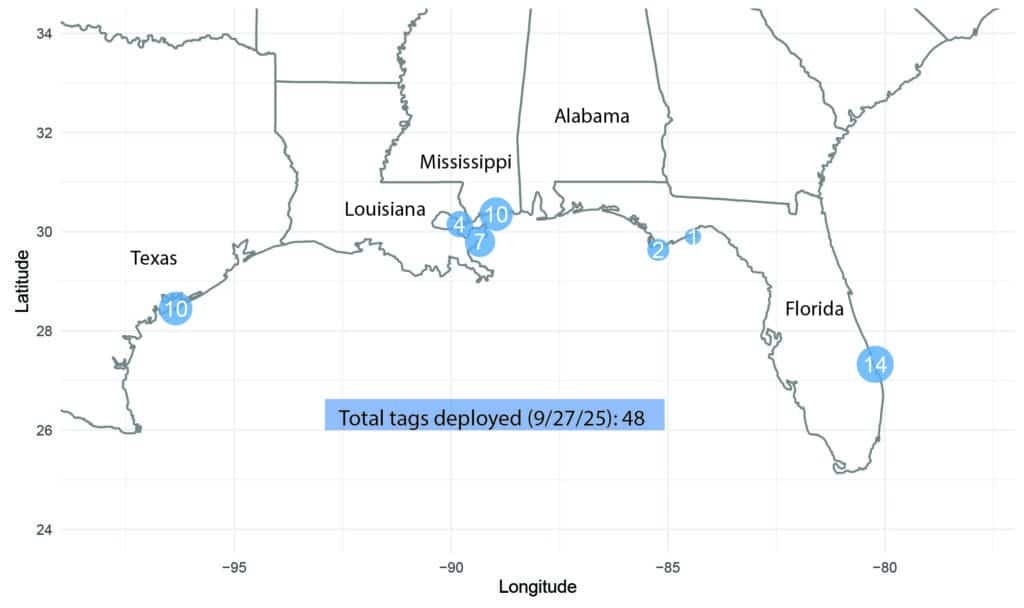
The Jack Project continues to gather momentum as tagging teams across the Gulf and South Atlantic deploy more acoustic tags. While the project faces challenges—everything from weather to shifting fish aggregations—progress has been made to gather critical data on the understudied species. Over 50 acoustic tags have been deployed in the projects range from Texas and South Carolina. Figure 1 below depicts the distribution of deployed tags by region (with 3 more tags deployed since it’s creation).
Earlier this summer, Texas waters played host to a special tagging effort. Monster Energy athlete and world class guide Jako Lucas teamed up with legendary fly designer Blane Chocklett and lead scientist Dr. Marcus Drymon to put acoustic tags into jack crevalle. Their collaboration highlighted what makes this project unique: a blend of world-class anglers, scientists, and brands working side by side to advance conservation.
In Louisiana, two well-known captains—Bailey Short and Ty Hibbs—have been busy deploying tags in the state’s fertile estuaries and nearshore waters. Their efforts are adding new data points from one of the Gulf’s most dynamic ecosystems to a rapidly growing data set. In the coming years, these tags will begin writing a story about Crevalle migration, distribution and behavior.
Dr. Drymon also spent time on the water with Captain Kyle Johnson in Mississippi waters, a relevant stretch of coastline for migratory species in the Gulf. By expanding the geographic spread of tagging efforts, the Jack Project aims to assemble a more complete picture of how these fish move across state lines and identify potential subpopulations that may exist.

Not all areas are experiencing the same opportunities. In South Carolina, jacks have not made their presence known for long this season, which has slowed tagging efforts further up the East Coast. While fewer tags have been deployed at the northern end of the traditional Jack range, the variance in localized abundance adds another detail to a story of discovery.
While nothing is guaranteed in the world of acoustic telemetry, the Crevalle community is hopeful that a majority of these tags will ping for years to come. The ASGA team will work collaboratively with our research and community partners (FIU, MSU and LKGA) to synthesize and amplify actionable research for the betterment of the fishery and anglers. Together, we are painting the first detailed portrait of jack crevalle behavior and movement across the Gulf and Atlantic.
These late Summer and early Fall tagging missions have been made possible with the generous support of the Camp Fire Conservation Fund.
Want to contribute to the story? Recreational anglers who target Jack Crevalle can log their catches on the GotOne App, which is available for Android and iOS. Logging your catch will help grow the data set for a data-poor species – and it’s as simple as taking a photo with your phone! Remember: GotOne keeps all catch data private for the angler and scrambles all data across a significant radius to ensure privacy when sharing data with scientists. Together, we can all help ensure that jack crevalle get the respect they deserve.

There are several videos doing the rounds on social media lately about stocking redfish into
ASMFC released Draft Addendum II to Amendment 3 of the Atlantic Menhaden Interstate Fishery Management
The November ASMFC Menhaden Board meeting will be one for the ages, yet many advocates
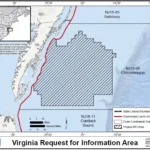
The federal government is once again testing how far it can push industrial extraction into
We rely on our members and donations to keep fighting for a sustainable tomorrow in marine conservation.
GIVE THE GIFT OF FISHERIES CONSERVATION THIS HOLIDAY SEASON. SHOP ASGA GOODS THAT FUND FISHERIES RESEARCH & ADVOCACY CAMPAIGNS
JOIN ASGA IN CALLING FOR CRITICAL MANAGEMENT ACTION AFTER YEARS OF SPAWN FAILURES & POOR MANAGEMENT.
By using this website, you agree to our use of cookies. We use cookies to provide you with a great experience and to help our website run effectively. To learn more, please review our privacy policy.