
A President’s Executive Order: Restoring American Saltwater Angling and Recreation
“Too Long, Didn’t Read”: There was an Executive Order on saltwater fishing last week. Executive

American Saltwater Guides Association Calls on ASMFC to Follow its Own Math and Implement a 40% Reduction to the Coastwide Menhaden Total Allowable Catch Without Delay
Urges Anglers, Guides, Business Owners and All Impacted Constituents to Submit SEPARATE Comments to ASMFC on Draft Addendum II and the Coastwide TAC
FLORAL PARK, N.Y., Sept. 30, 2026 – The American Saltwater Guides Association (“ASGA”), a coalition of forward-thinking guides, small business owners and like-minded anglers who understand the value of keeping fish in the water, and the future of resilient fisheries, today called on the Atlantic States Marine Fisheries Commission (ASMFC) to follow its own math and implement an immediate 40% reduction to the coastwide menhaden total allowable catch (the “TAC”), which applies to every state from Maine to Florida, and is separate from the Chesapeake Bay Reduction Fishery Cap that is currently under review as part of Draft Addendum II.
Preliminary projections presented by the ASMFC’s Atlantic Menhaden Technical Committee and Stock Assessment Subcommittee on September 28 show that keeping the current quota of 186,840 metric tons would carry a 99.5% chance of exceeding the ecological reference point fishing mortality target in every year from 2027 through 2029. Just to reach a 50/50 chance of staying under that target, the coastwide quota would have to fall to 114,200 metric tons, a 39% reduction. Even that reduction is based on natural mortality numbers that the ASGA believes are still too liberal.
In October 2025, the ASMFC reported that the then-proposed 2026 quota of 186,840 metric tons carried a 100% probability of exceeding the ecological target, and that a reduction of 50% or more would be needed to lower that risk. The Board instead cut the quota by 20%, for 2026 only, and pushed the 2027 and 2028 decision to this November. That 20% comprised ‘paper fish,’ since the industrial fleet failed to reach its quota for three consecutive years (Utilization was 71% in 2023, 80% in 2024, and preliminary 2025 looks lower). In those two years, the commercial fishery achieved only 77% and 80% of the coastwide TAC, respectively. This meant the 20% reduction did not reduce the harvest of any physical fish from the TAC but instead reduced ‘paper fish’ that were not being harvested anyway, resulting in no actual reduction in harvest. Now, one year later, the technical committee is again recommending a significant reduction in TAC, and the ASGA is calling on the commission to listen and take the action it should have taken a year ago.
“Everyone is watching the Chesapeake Bay and Addendum II, and they should be, but the coastwide TAC is the bigger decision, and until Monday, the ASMFC had failed to provide the data needed to take a position on it,” said Tony Friedrich, president and policy director of the American Saltwater Guides Association. “What they disclosed confirms what anglers up and down the coast are seeing on the water: that a drastic reduction in harvest is needed, and it’s needed now. The ASMFC’s own scientists just told the Board that the status quo has a 99.5% chance of blowing past the ecological target every single year through 2029. Reducing the TAC by 39% only brings the chances of staying under target mortality to a coin flip. Again, the Chesapeake is important, but this is something that impacts anglers from Maine to Florida, and every guide and angler on the Atlantic coast has a stake in it.”
“Last year the science said cut 50% or more, and the Board took 20% – a reduction that represented only paper fish – for just one year. Now, we’re back here again,” said Friedrich. “The coastwide quota will be set by specification at the Annual Meeting, and delaying this reduction is not a choice; it’s critical. The ASMFC isn’t actively requesting public comment on the TAC, but we have confirmed that they’re accepting them, and we need everyone we can to submit comments calling for at least a 40% reduction in the coastwide TAC before October 9.”
For guides, anglers, and small businesses that rely on healthy fisheries, a healthy coastwide menhaden stock matters beyond the Chesapeake. Menhaden are not like striped bass. Striped bass depend on the Chesapeake to spawn, but menhaden spawn along the coast from the Carolinas to southern New England. Only about one in five adult menhaden in the Northeast come from Chesapeake Bay nursery. Addendum II’s Bay Cap protects that nursery. The TAC protects the coastwide spawners.
The ASGA is calling on the ASMFC Atlantic Menhaden Management Board to:
Two decisions, two comments
The ASMFC has confirmed to ASGA that it is accepting public comment on both Draft Addendum II and the coastwide TAC, but you must submit them as separate comments.
“If you only send one comment, you’ve only fought half the fight,” said Friedrich. “Comment on the Bay. Then comment on the coast. Send them separately.”
The Atlantic Menhaden Management Board meets Nov. 10 and is expected to take final action on both the quota and Addendum II on Nov. 11 at the ASMFC Annual Meeting in Newport, R.I. For more information on menhaden management and how to comment, visit www.saltwaterguidesassociation.com.
About the American Saltwater Guides Association
Founded in 2019, the American Saltwater Guides Association was created to activate and unite guides, small business owners, and like-minded anglers, and to represent them and their voice at the federal, regional, and state level. The ASGA is a coalition of forward-thinking guides, small business owners, and like-minded anglers who understand the value of keeping fish in the water. We realize that abundance equals opportunity, and that such opportunity is quite a bit more important to the future of fishing than low size limits and full coolers. More information about the ASGA, its mission, board members, and current areas of focus is available at www.saltwaterguidesassociation.com.
Media Contact:
Tony Friedrich
Info@saltwaterguidesassociation.org
“Too Long, Didn’t Read”: There was an Executive Order on saltwater fishing last week. Executive
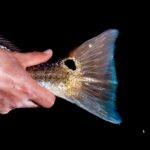
There are several videos doing the rounds on social media lately about stocking redfish into
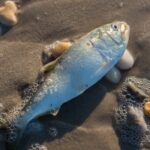
ASMFC released Draft Addendum II to Amendment 3 of the Atlantic Menhaden Interstate Fishery Management
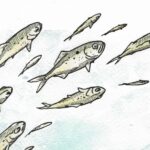
The November ASMFC Menhaden Board meeting will be one for the ages, yet many advocates
We rely on our members and donations to keep fighting for a sustainable tomorrow in marine conservation.

The Morning Blitz Cap. 100% of proceeds fund The Striper Project. Only 100 made. Don't miss out!
Shop The CapGIVE THE GIFT OF FISHERIES CONSERVATION THIS HOLIDAY SEASON. SHOP ASGA GOODS THAT FUND FISHERIES RESEARCH & ADVOCACY CAMPAIGNS
JOIN ASGA IN CALLING FOR CRITICAL MANAGEMENT ACTION AFTER YEARS OF SPAWN FAILURES & POOR MANAGEMENT.
By using this website, you agree to our use of cookies. We use cookies to provide you with a great experience and to help our website run effectively. To learn more, please review our privacy policy.