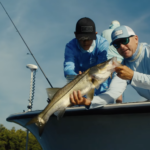
Florida Anglers Demand Abundance
“What I once saw with my own eyes, and fished every day, is so far

Striped bass anglers from Maine to Virginia have spent years navigating shifting regulations meant to protect the fish we love. However, among the most confusing and dangerous policy decisions that have emerged in recent years is the concept of “no-targeting” closures. Many would (logically) assume that “targeting” is defined as actively fishing with intent, regardless of actually landing a fish. Unfortunately, there is even more grey area with “no-targeting” than most expect. In this blog we will explore a cautionary tale from a thoughtful, law-abiding angler who dealt with the worst aspects of the “no-targeting nightmare”.
We’ve said it before, and we’ll say it again: no-targeting is unenforceable, ineffective, and ultimately harmful to the recreational angling community with no significant benefit for the fishery.
In our latest podcast episode of The Guide Post Podcast, we sat down with Alan Batista, a well-known Maryland angler and fishing author, to hear what happened when he was issued a ticket for zero illegal activity. Alan has always been in tune with angling seasons and current striper regulations. On this fateful morning, Battista was abiding by all regulations while fishing for blue catfish, one of the only (unfortunately) abundant species in the Chesapeake Bay system. The following story is frustrating. The implications are bigger than any one angler. And if you’re a striped bass fisherman, you need to hear it.
Maryland has become the poster child for no-targeting closures. It’s also become a textbook example of why the policy doesn’t work. In April, during Maryland’s no-targeting striped bass closure, Battista went out at night to fish for invasive blue catfish — a completely legal and even ecologically encouraged activity. To avoid confusion while optimizing his catfish presentation, he intentionally used garlic-scented dough balls as bait, a known catfish attractant that sits at the bottom of the “best striper baits” list. His rig was a classic catfish setup: a large circle hook, a float, and a sinker.
After hours catching cats, Alan accidentally hooked and released a single striped bass. As required, he released the fish and left the spot promptly. On his way out, two Natural Resources Police officers emerged from the woods and began questioning him. Alan explained what had happened, showed them his bait, and expected to move on. Instead, he was taken to his vehicle, subjected to a full gear search, and had both his phone and GoPro camera searched without a warrant.
Over the course of an hour, officers laid his equipment out on the roadside, interrogated him, looked through pictures of Alan’s catfish, and still issued a $250 citation, not for attempting to target stripers, but simply for “catching” one during the closed period. As Alan would later discover, Maryland law defines “targeting” as both “attempting to catch and catching” striped bass — meaning even accidental bycatch can be treated as a violation, regardless of gear, bait, or intent.
Alan fought the ticket in court, hiring a lawyer and assembling a detailed evidence packet including receipts for his catfish bait and a statement from Maryland DNR itself acknowledging that incidental striped bass catch does occur while fishing for other species. The judge ultimately found him not guilty, but only after Alan endured reputational damage, public harassment, and significant personal expense.
This is what no-targeting policies open the door to: subjective enforcement based on assumptions about intent, not actual fishing behavior. That creates a dangerous precedent where anyone with a rod and reel becomes a target, even if they follow the law. No-targeting hinges on intent, but it’s complicated to measure intent in a court of law. As our Association has said repeatedly, that’s not a tenable way to build conservation policy. Law enforcement officers are put in impossible positions, tasked with determining whether an angler was thinking about catching a striper. Remember: no‑targeting closures are the least enforceable regulations in striped bass management. According to the Law Enforcement Committee (LEC), these closures received the lowest possible enforceability score—a 1.87 out of 5, ranking as dead last among 27 different management guidelines evaluated.
ASGA is not criticizing our natural resource officers in the field. We’re criticizing the policies that put them — and us — in these situations. The end result is wasted resources, unnecessary conflict, and no measurable benefit to the striped bass population.
Alan’s experience is not an isolated case. It’s a glimpse into a broader failure in policy logic — one that could easily spread beyond Maryland if we’re not careful. Earlier this year, the ASMFC Striped Bass Board considered a proposal that would have extended Maryland-style no-targeting closures up and down the entire Atlantic coast. The proposal emerged as part of a broader push to reduce striped bass mortality, which ASGA supports. Unfortunately, this deeply flawed campaign was developed with bad intent. ASGA assembled the angling community at large. We issued a formal letter to the ASMFC laying out the policy’s legal and practical failures. We rallied hundreds of partner brands and organizations to co-sign that letter, uniting the voices of guides, tackle manufacturers, conservationists, and recreational anglers from all walks of life. Our message was grounded in data and experience. That proposal was ultimately withdrawn, a clear win for common sense, though at the expense of real conservation-focused policy being enacted.
In the latest Guide Post episode, Alan’s story reminds us why that fight mattered. It’s easy to imagine how a flawed regulation like this — confined initially to a few rivers in Maryland — could wreak havoc across New Jersey surf zones, Massachusetts bays or the Connecticut coast. Not to mention, these no-targeting regulations exist in the same state with serious issues regarding the accuracy and implications of their commercial data, but that’s an entirely different discussion. That’s why ASGA will continue to oppose any expansion of no-targeting policies, and why we believe Alan’s experience should be a wake-up call for fishery managers everywhere. You can listen to the full episode of Spotify or Apple Podcasts by clicking the respective links. We commend Alan Battista for having the courage to stand up for what’s right, both during this situation and at the management level over many years!
“What I once saw with my own eyes, and fished every day, is so far

UPDATE AS OF 05/14/2026: The proposed rule mentioned below passed on a 5-2-2- vote and
The Connecticut Senate Has a Powerful Opportunity to Protect Striped Bass Before Session Ends. The

The Atlantic States Marine Fisheries Commission holds its Spring Meeting this week. The quarterly gathering
We rely on our members and donations to keep fighting for a sustainable tomorrow in marine conservation.
GIVE THE GIFT OF FISHERIES CONSERVATION THIS HOLIDAY SEASON. SHOP ASGA GOODS THAT FUND FISHERIES RESEARCH & ADVOCACY CAMPAIGNS
JOIN ASGA IN CALLING FOR CRITICAL MANAGEMENT ACTION AFTER YEARS OF SPAWN FAILURES & POOR MANAGEMENT.
By using this website, you agree to our use of cookies. We use cookies to provide you with a great experience and to help our website run effectively. To learn more, please review our privacy policy.