
Inviting the Devil to Dinner: Louisiana Hatchery Dystopia
There are several videos doing the rounds on social media lately about stocking redfish into

“Too Long, Didn’t Read”: There was an Executive Order on saltwater fishing last week. Executive Order 14430 does not rewrite federal fisheries law, immediately increase harvest, or replace MRIP; instead, it directs federal agencies to reconsider how recreational fisheries are managed, how data are collected, and how fishing access is prioritized. There are a few worthwhile pieces, including better recreational data improvements, mobile reporting and stronger recognition of recreational fishing’s economic value. That being said, implementing meaningful improvements will take years. ASGA’s major concern is that broader provisions could be used to weaken conservation safeguards, substitute unproven data systems for existing science, expand access in protected areas, or redefine restoration around hatchery “production” rather than rebuilding wild fish and habitat. Ultimately, the order’s impact will depend less on the document itself than on the rules, agency actions, and management decisions that follow. That is where anglers and conservation advocates will need to pay close attention.
There was an Executive Order on saltwater fishing last week. As we’re sure you saw on social media, the groups that pushed it called it a victory. Organizations and individuals who hate this administration are calling it a disaster. Many reached out to us looking for a rapid reaction, but we took our time to formulate a real position. The following blog presents a factual review of what this EO does and does not do, because our only goal is to empower you with a factual reality so that you can advocate for what’s best for the resource.
Restoring American Saltwater Angling and Recreation (Executive Order 14430) was signed on September 17, 2026. Let’s start with what an Executive Order does. It is not a statute. It does not rewrite Magnuson-Stevens. It does not raise the bag limit on fluke, scup, black sea bass, or bluefish. It does not retire MRIP this afternoon. What the EO does is command Commerce, Interior, Agriculture, and the Army to consider, evaluate, review, and initiate – almost always “consistent with applicable law.” That last clause is critical.
EO 14430 specifically features some deeply concerning language that leaves us wondering what the actual goal of the EO might be. To give background on where this originated, trade groups asked the administration for a posture shift toward recreational fishing. They got that sentence as a response, but that ‘consistent with applicable’ law might just make what they wanted even less attainable than it was before; we’ll get into that in more detail in a minute. The question now is: what did they not ask for while they were in the room, and as a result, what does this piece of paper actually do on the water?
This brief is a monster. Here’s our conclusion. The EO says recreational fishing matters and that the data should get better. Those two things are true. Improving estimates is good. Figuring out whether a mobile report can replace a mail survey is good. So are the 4(c) tagging and release-mortality work, which we have supported through Massachusetts DMF’s striped bass study, and better economic data under 4(d). The process to improve those data systems will take many years. That’s just how things work.
Most of the rest of the EO verbiage is not positive. Hatcheries scored as “production” are not restoration. Expedited shark exports are not a depredation plan. Artificial reefs dropped into sanctuaries and monuments are not net-positive habitat. A 30-day hunt for rules that “burden” anglers is how a catch limit gets treated like a parking regulation. This is some of the verbiage that sucks, and unfortunately, it makes up most of the document. Fisheries are a public process. Councils, commissions, comment periods, and the statute are how a bag limit gets set. That work is supposed to outlast whoever holds the White House. An executive order is a memo from one administration to its own agencies. It is not Magnuson-Stevens and it is not an assessment. No administration should be managing fish from the Roosevelt Room. This paper is not the answer.
There were pieces that could have been useful. This administration cut down the agency that will be tasked with the useful pieces of this EO and then handed the remaining staff a work list. NOAA is already short of people and stretched thin getting the recalibrated numbers into every Atlantic assessment. This EO adds guideline reviews, app architecture, substitution thresholds, pilots, an economics plan, a permit portal, a predator task force, and a working group told to grade habitat by “production,” which is how fish in a truck start getting counted as a year class.
EO 14430 is not a harvest increase for the Mid-Atlantic or New England. It is not permission to build sector separation off a survey these states do not run. It is not a directive to throw out the FES calibration before it hits the assessments. Separate ACLs are already off the table in the sector separation amendment; multi-year for-hire measures, letters of authorization, and limited entry are not. Watch who reads “maximizes fishing access” as a green light for those. That is the tell.
The groups taking a victory lap are cheering an order that does little for the resource and opens the door to real damage: more access in sanctuaries and monuments that exist to protect what is already there, a “production” scorecard that favors the hatchery truck over habitat, and an invitation to phase out the survey backbone before anything certified replaces it. None of that puts a viable fish in the water or improves the system to manage them, and assessing that part is not complicated. You can take a rec-data order on the merits. You can like the few pieces that help. What you cannot do is pretend the rest of the language helps, or that standing up only when “the bag limit is in the room” is a conservation program.
Reminder: the definition of conservation is the protection, management and preservation of natural resources to prevent its destruction. Efforts to increase harvest and open access are the literal antithesis of conservation. We encourage you to remind your favorite “conservation group” about that distinction.
Anyone who tells you this order means more black sea bass in the Mid-Atlantic or New England hasn’t read it. This has the potential to create one mess after another. It hurts far more than it helps, and that’s what people will remember. You can’t fix a fisheries issue with an EO, and this proves it.
Before we dive in, here are a couple of important things to keep in mind. First, this EO appears to have been written primarily for the Gulf and parts of the South Atlantic. Those regions have state catch programs in place. Mid-Atlantic and New England states have not built that machine for private-boat data. And second, a lot of these issues will take five to ten years to address, so we don’t expect much change overnight. Importantly, the significant progress we’re making on keeping the ASMFC accountable remains full-steam-ahead.
Let’s take Executive Order 14430 section by section. This blog will present the exact language in the EO and our take on the potential impacts, a communications model we have not seen since this EO went live. Be weary of those who tell you to panic or celebrate without thinking or understanding…
Section 1. Purpose and Policy
(a) America’s outdoor recreation sector generates over $1.2 trillion annually and supports over 5 million jobs. To ensure America’s recreational fishing remains strong, Federal fisheries management must appropriately prioritize both recreational and commercial fishing. From saltwater anglers and offshore boaters to charter operators, the recreational fishing industry is a strong driver of our Nation’s outdoor economy. Aligning both with the Make America Beautiful Again (MABA) Commission, established under Executive Order 14313 of July 3, 2025 (Establishing the President’s Make America Beautiful Again Commission), and with Executive Order 14276 of April 17, 2025 (Restoring American Seafood Competitiveness), this order modernizes Federal management by shifting the Federal posture from restricting recreational access to fishing to actively empowering affiliated industries and coastal communities.
(b) It is the policy of the United States to elevate the marine recreational fishing industry as an important consideration in all Federal ocean, coastal, and public land decision-making.
Recreational fishing is now a stated policy interest. This order lines itself up with two earlier documents – the MABA Commission and EO 14276 on seafood competitiveness. The truth is, recreational fishing has been an afterthought at NOAA for as long as we can remember. This order might change that. We’ve been fighting relentlessly for a seat at the table for decades, often ignored through the lens of “commerce”, though the recreational economic industry is massive. Now, we might actually have a seat, and that isn’t a bad thing.
Section 2. Agency Implementation
(a) To effectuate the policy described in section 1 of this order, all relevant executive departments and agencies (agencies) shall partner with States and the private sector to vigorously rebuild, expand, permit, and modernize data collection. All such agencies shall eliminate unnecessary restrictions that harm our coastal economies, burden charter fishing businesses, and limit public access to our marine resources. Furthermore, it is the policy of my Administration to demand accurate cutting-edge data collection and empower State-Federal partnerships to produce the information needed for responsible management.
(b) Within 180 days of the date of this order, pursuant to 16 U.S.C. 1851, the Secretary of Commerce (Secretary) shall review targeted National Standards Guidelines issued under the Magnuson-Stevens Fishery Conservation and Management Act (16 U.S.C. 1801 et seq.) for consistency with the purpose of this order. Specifically, the Secretary shall, at a minimum, consider revising the guidelines for National Standard 1 (Optimum Yield) and National Standard 2 (Best Scientific Information Available), to ensure they appropriately account for the unique biological, economic, and social characteristics of the recreational fishery, and to facilitate the rapid integration of State-level data into Federal management decisions, where appropriate.
After what we have been through with stripers and menhaden, improving data doesn’t seem like a terrible idea. A mistake on the menhaden stock assessment caused about 450 million pounds too many menhaden to be harvested between 2022 and 2025. ASGA ran the recalibrated MRIP numbers for striped bass ourselves. Across 1982–2025, directed trips from private boats and shore come in 41 percent lower than the old estimates. Because the recalibration cut the old years much more than recent ones, the stock was smaller and less productive than managers thought. Harvest limits set on the old numbers were likely too high, and the 2027 benchmark has to test that for striped bass and every species built on the same inaccurate survey.
The real question is how long it will take to get accurate, cutting-edge data collection and State-Federal partnerships that produce the information needed for responsible management. The reality of implementing that is another story. States in the Gulf and a few species in Florida have robust state data. From Georgia to Maine, this is a pipe dream. It took almost a decade for some Gulf states to replace MRIP. It does not happen overnight. None of this changes Magnuson. It can’t. That’s the law, and an EO can’t touch it. Will this be problematic? It sure will. We expect that the process of implementing new data sources could be used to distract and delay action in the near-term. Keeping the discussion on track during the process will be the trick, and we’re ready to make sure we stay focused.
On that note, suggesting all agencies eliminate burdensome regulations is equally terrifying. How in the world do we interpret this verbiage? The EO doesn’t change any part of Magnuson, but it opens the door for a bunch of noise, wasted time, and damage to our fisheries. This administration did not come up with that line for anglers. Its April 2025 seafood order told Commerce to consider “suspending, revising, or rescinding regulations that overly burden” the commercial fishing industry. This order points the same formula at us. It’s disappointing that these groups had a shot at doing something decent with an EO and came away cheering boilerplate. The menhaden assessment error and MRIP effort miscalculation has left us in deep trouble for most species on the Atlantic, all due to over harvest. If you think there are burdensome regulations right now, just wait. It’s about to hit the fan.
Finally from this section, clarification around Section 2 (b). What the EO outlines is that they are reviewing the guidelines under our ten National Standards, not the Standards themselves. Guidelines tell councils how to interpret the National Standards. The two National Standards that matter are NS1 and NS2, they represent the core of Magnuson (we’ve listed below, for reference). For context and how a guideline revision works, the last major National Standard guideline revision finished in 2016. That process took four and a half years from the first public notice to a final rule. NOAA is understaffed and stretched thin getting the recalibrated MRIP numbers into assessments. Do we need to add something to their list? By any means, this isn’t going to change anything in the near-term, but to our point earlier, it could absolutely be a distraction. The standards aren’t the problem; the inputs are, so the focus on data collection is important. The following is straight from the NOAA website:
National Standard 1 – Optimum Yield
Conservation and management measures shall prevent overfishing while achieving, on a continuing basis, the optimum yield from each fishery for the United States fishing industry.
National Standard 2 – Scientific Information
Conservation and management measures shall be based upon the best scientific information available.
Section 3. Modernizing Data Collection Infrastructure for Recreational Catch-and-Effort Estimates
(a) To resolve chronic inaccuracies and latency in Federal recreational catch and effort estimates, the Federal Government must transition away from antiquated data collection and sampling practices. Accordingly, the Secretary, acting through the Administrator of the National Oceanic and Atmospheric Administration (NOAA), shall to the extent feasible and consistent with applicable law, take appropriate action, including through rulemaking pursuant to 16 U.S.C. 1851 and 1855(d), where necessary, to modernize Federal data collection infrastructure.
(b) The Secretary, acting through the NOAA Administrator, shall evaluate the statistical reliability of traditional mail-in survey systems for recreational catch-and-effort data collection and their adequacy for dynamic fishery management. The results of this analysis should be considered in determining whether, and to what extent, such mail-in survey systems shall be phased out.
(c) The Secretary, acting through the NOAA Administrator, shall harness existing platforms and potential successor platforms and technologies to deploy standardized, user-friendly mobile applications for mandatory and voluntary electronic reporting by recreational anglers and for-hire operators.
(d) To the extent feasible and consistent with applicable law, data collected via mobile applications described in subsection (c) of this section shall be securely aggregated into a modernized Federal data architecture. This data architecture will process real-time catch, effort, and observational data, serving as the primary analytical repository for fishery managers to inform stock assessments, establish seasonal quotas, and make rapid, data-driven regulatory decisions.
Section 3(a) points at rulemaking under 16 U.S.C. 1851 and 1855(d). Those two provisions are easy to skip in a fact sheet. They are the operative authorities.
Let’s start with some translation: Section 1851 is the National Standards. Repeating what we outlined above in more detail, a rule issued under that section does not amend the statute or the Standards. By statute, those are “advisory guidelines (which shall not have the force and effect of law).” But NOAA judges every new council action against them, so a rewrite changes what councils propose and what NMFS approves from then on.
Section 1855(d) is the Secretary’s general implementing authority: regulations “as may be necessary” to carry out the Magnuson-Stevens Act. That is the vehicle used for secretarial process rules, data standards, and implementing regulations that do not require a new Act of Congress.
Read together with sections 2(b) and 3(b)–(d), that pathway can alter how recreational catch is estimated and, in turn, how harvest limits are set. It does not, by itself, raise a bag limit or create a separate for-hire quota. It can create the legal basis for the next amendment to treat a new data stream, a new optimum-yield interpretation, or a state substitution as consistent with National Standard 2.
Section 2(b) tells the Secretary to consider revising the National Standard 2 guidelines to “facilitate the rapid integration of State-level data into Federal management decisions, where appropriate.” Section 4(b)-, which we will talk about shortly, tells NOAA to consider substituting a state’s catch-and-effort series for MRIP where MRIP percent standard error exceeds a threshold and the state series has a lower error rate. An 1855(d) rule that treats an uncertified state survey or an incomplete electronic logbook as best available science would put specifications on how agencies can integrate mixed data sources, opening the door to a revised Fishing Effort Survey (“FES”), the prior FES, or a state or app series that has not been certified.
Section 3(b) requires an evaluation of mail-in effort surveys and consideration of whether those systems should be phased out. The FES remains the effort backbone for most Atlantic recreational assessments. From Maine through Georgia, no state currently operates a NOAA-certified private-boat catch-and-effort program that could replace MRIP for any species. A phase-out rule that lands before a replacement series exists would interrupt the only coastwide recreational estimates those assessments have. As should be abundantly clear, we’re not in any way saying MRIP is perfect, but with the pending revisions that we have driven, we’re moving in the right direction and any change to process here needs to be done with a replacement in place to avoid costly gaps.
Sections 3(c) and 3(d) direct NOAA to deploy mobile reporting and, to the extent feasible and consistent with applicable law, to treat those data as the “primary analytical repository” for assessments, quotas, and in-season decisions. For-hire vessels in the Greater Atlantic are already supposed to file electronic vessel trip reports. Compliance on the Mid-Atlantic species at issue, however, is not sufficient. Available estimates have put reporting in the range of only 20 to 30 percent of the activity that should be on the books. A regulation that treats a partially filed app as real-time catch does not make the missing trips appear. It produces either in-season restrictions driven by a partial count or a finding that “the app shows harvest is within limits” while independent surveys say otherwise. Private-boat catch that is not filed becomes invisible. Late or incomplete for-hire reports become the fishery.
Section 2(b) also tells the Secretary to consider revising the National Standard 1 guidelines so they “appropriately account for the unique biological, economic, and social characteristics of the recreational fishery.” That language can support a fuller accounting of recreational mortality, including release mortality. It can also be used to stretch optimum yield so that multi-year for-hire measures appear consistent with the standard. Again, the statute will not change, but the guideline might.
An 1855(d) regulation that modernizes reporting by mode is a short step from separate accountability, separate seasons, and specialized for-hire authorizations. Those outcomes require a Council action. The regulation can be written so that action looks like an infrastructure update rather than a reallocation. In the Mid-Atlantic and New England, that matters because section 4(b)’s substitution test does not currently have a state or alternate FES to attach to for the four species (flounder, scup, black sea bass, bluefish) most often discussed in that context.
Therefor, t he same national rule will not fit all coasts. Section 4(b) only operates where a state already collects catch-and-effort data with a lower error rate than MRIP. Programs that can meet that description exist only in the Gulf. A regulation drafted as if every state were prepared to replace MRIP would leave migratory stocks managed under certified numbers in one region and under an incomplete substitute in another.
None of this is a directive to increase harvest in the Mid-Atlantic or New England. It is also not a directive to retire the revised MRIP estimates before they are incorporated into the relevant assessments. Those estimates remain the best scientific information available until a certified replacement exists. The risk is a subsequent rule that treats modernization as a reason to use a number that has not earned that status.
The order’s repeated qualifier – “consistent with applicable law” – does not independently prevent those outcomes. The National Standard Guidelines are how the Secretary interprets that law. Revising the guidelines changes the interpretation against which later management measures are judged. Since Loper Bright v. Raimondo (2024), a Magnuson case brought by Atlantic herring fishermen, courts no longer defer to NOAA on what the law means, but they still give wide room on science calls, like whether a state survey beats MRIP. That cuts both ways, and again, making sure that there is a viable alternative in place before shifting data sources for management efforts will be key in the coming sessions.
The document to watch is the proposed rule. Language that allows uncertified state data to replace MRIP, that designates an unvalidated electronic report as the primary catch file, or that revises National Standard 1 toward access at the expense of the overfishing prohibition, is the point at which this authority would change outcomes on the water.
Nowhere does section 3 say stop using the current estimates tomorrow. It does create another potential mess. The only clear positive is more work on mobile apps. If that information can be validated, it can change fisheries for the better. That is a bright spot in all of this. ASGA has been an integral partner in the GotOne! app since day one, and we have seen firsthand what well-built angler reporting can do.
Section 4. Restoring Integrity to Fisheries Science and Data
(a) To further ensure that management decisions made during the modernization transition outlined in section 3 of this order are based on improved data collection practices, I have determined that certain additional measures are necessary.
(b) Along the Gulf of America and the Atlantic Coast, recreational access has been improperly restricted by inaccuracies within NOAA’s Marine Recreational Information Program (MRIP) data. To ameliorate these data deficiencies, the Secretary, acting through the NOAA Administrator, shall, consistent with applicable law, including 16 U.S.C. 1801 et seq., consider establishing a data-replacement threshold tethered to the Percent Standard Error (PSE) for MRIP data collected for any seasonal fishery. Where the PSE for MRIP data for a seasonal fishery meets or exceeds such specified data-replacement threshold, and an affected State collects recreational catch-and-effort data with a lower error rate, NOAA shall then consider substituting the relevant State’s data in place of MRIP data for management decisions concerning such fishery. This approach will help ensure that, consistent with National Standard 2, conservation and management measures are based upon the best scientific information available.
(c) To address the decline of iconic recreational fisheries, such as the Atlantic striped bass and other depleted stocks, the Secretary shall generate a list of key species to use in partnership with the recreational angling community, charter captains, and State agencies to gather real-time data, deploy advanced tagging technologies, and improve catch-and-release mortality estimates. The Secretary shall develop and initiate at least two new pilot programs for recreational fisheries data collection or management approaches working with the angling community that test innovative solutions for achieving sustainable fisheries management that maximizes fishing access.
(d) Within 180 days of the date of this order, the Secretary shall develop a comprehensive 5-year strategic plan with clear implementation milestones to improve the collection, analysis, and application of recreational fisheries economic data to support fisheries management. This plan shall ensure that the economic impact and value of recreational fishing, including for-hire fisheries and shoreside support industries, is fully accounted for in Federal fishery management decisions and harvest opportunities.
Section 4 is the provision most likely to be cited as authority to change a bag limit, a season, or a mode-specific measure, however in reality, current infrastructure limits its reach to the Gulf and Florida. Those programs are Louisiana’s LA Creel, Mississippi’s MS Creel, Alabama’s Snapper Check (becoming AL Creel in 2027), and Florida’s State Reef Fish Survey. The Atlantic did not build anything comparable.
The key takeaway here is that any state catch-and-effort series must prove a documented lower error rate than MRIP for that fishery to be considered a replacement. Only then shall NOAA consider substitution. Currently, and as we’ve outlined already, as of September 2026, no state from Maine through Georgia collects a certified series NOAA would swap in for MRIP under 4(b). Nothing on the East Coast outside Florida is on NOAA’s certified list.
If 4(b) is applied as written, substitution is available where a state already built the survey. If it is applied as a talking point, it will be offered as permission to discard the revised FES in regions that have no replacement. National Standard 2 does not support the second reading.
4(c) requires a species list and at least two pilot programs. The pilots may test data collection or management approaches. The closing phrase – “maximizes fishing access” – will be attached to mode-specific measures and to multi-year for-hire specifications. A pilot that cannot be independently monitored is not a management approach. It is an experiment with the quota.
4(d) gives the Secretary 180 days to produce a five-year plan for recreational economic data, including for-hire businesses and shoreside industries. Counting the economic contribution of recreational fishing is appropriate. Economic value is not biomass. “Harvest opportunities” in this subsection is not a Mid-Atlantic or New England harvest increase, and it is not a finding that a for-hire measure may be frozen while private-boat measures absorb a reduction.
Read in isolation, 4(b) sounds like an off-ramp from MRIP, however when read with section 3 and with National Standard 2, it is an off-ramp only where a state already runs a tighter survey. The Mid-Atlantic and New England have not built that survey for the species at issue, and the order does not create one. Until a certified series exists, the revised MRIP estimates are the science the Councils are required to use.
The test for implementing any action under this section is the same as under sections 2 and 3. Does the action substitute an uncertified number for MRIP? Does it treat a pilot or an application as a specification? Does it treat economic value as a reason to defer the calibration? If the answer to any of those questions is yes, the action has left the text of the order and entered allocation.
Section 5. Rescission of Regulations that Restrict Marine Infrastructure and Access
(a) Within 30 days of the date of this order, the Secretary of the Interior, the Secretary of Agriculture, the Secretary of Commerce, and the Assistant Secretary of the Army for Civil Works shall, consistent with applicable law, take steps to initiate action to suspend, revise, or rescind regulations that overly burden boaters, anglers, and outdoor businesses.
(b) Accordingly, the Secretary shall, to the extent feasible and consistent with applicable law, make use of technological advancements for marine mammal avoidance. In so doing, the Secretary, acting through the NOAA Administrator and, where necessary, in consultation with the Commandant of the United States Coast Guard, shall facilitate coordination with the private sector to integrate key technologies.
(c) To reduce administrative burdens, within 60 days of the date of this order, relevant agencies shall evaluate existing agency permitting authorities to effectuate a transition to multi-year permit terms (minimum of 3 years) that include, to the extent permitted by applicable law, a standard presumption of renewal. To implement this presumption of renewal without creating new information collection burdens, these agencies shall, to the extent feasible and consistent with applicable law, rely on interagency data sharing agreements and internal database verification rather than new applicant submissions. Agencies shall consider whether this presumption of renewal should apply exclusively to permittees in “good standing,” which may be defined as permittees about which agency records confirm:
(i) are in full compliance with United States Coast Guard safety regulations;
(ii) have incurred no major environmental or fisheries violations; and
(iii) maintain a 100-percent compliance rate with the mandatory electronic catch-reporting requirements established in section 3 of this order.
(d) To minimize duplicative applications across Federal agencies, relevant agencies shall, to the extent feasible and consistent with applicable law, establish the infrastructure necessary to develop a single, unified interagency Special Use Permit (SUP) application, with the aim of deploying a unified “One-Stop” joint permit portal within 1 year of the date of this order.
Section 5 does not raise a Mid-Atlantic bag limit. The only concrete benefit it offers a federally permitted vessel is a chance at a three-year license. Everything else in the section is either a 30-day hunt for rules to cut or a direction to look at whale-avoidance technology.
Four agencies have 30 days to start suspending or rescinding rules that “overly burden” boaters and outdoor businesses. The list is not in the order.
In regards to the three-year license provision, after Coast Guard compliance, a clean violation record, interagency database checks, and 100 percent electronic catch reporting under section 3, a federally permitted vessel operator may receive a multi-year term of at least three years and a presumption of renewal. This is not a separate quota, but just a longer piece of paper.
The reporting test, however, makes this an issue for the industry it applies to . Greater Atlantic for-hire vessels already file electronic VTRs. Available estimates have placed compliance on the Mid-Atlantic species at issue far below 100 percent – on the order of 20 to 30 percent of the activity that should be on the books. Under the definition the President signed, that fleet is not in good standing. The order only offered a longer license to people who already report, and puts more pressure on every for-hire operator who is not reporting to come current.
The workshop argument will be that multi-year permits are “for-hire resiliency.” On the page, resiliency is a three-year card conditioned on compliance the fleet has not produced.
The right whale rule still in force is the 2008 vessel speed restriction: most vessels 65 feet and longer, 10 knots or less, in Seasonal Management Areas. NOAA has treated that speed limit as an effective way to reduce lethal strikes. A 2022 proposal to drop the threshold to 35 feet was withdrawn in January 2025. In March 2026 the agency published an advance notice of proposed rulemaking on replacing seasonal speed restrictions with “technology-based” avoidance, and the notice calls itself “possible deregulatory action.” An advance notice is not even a proposed rule.
Section 6. Fast-Tracking Artificial Reefs and Habitat Creation
(a) Within 60 days of the date of this order, the Secretary of the Interior, acting through the Marine Minerals Administration, shall establish a Federal Outer Continental Shelf Reef-in-Place Program (Program) to facilitate the conversion of decommissioned offshore oil and gas and other-use structures, with the exception of infrastructure associated with offshore wind energy facilities, into permanent artificial reefs through reef-in-place, topple-in-place, or other approved reefing methods, where consistent with applicable law.
(b) The Program shall be available to qualifying offshore structures and leaseholders that satisfy all applicable statutory, regulatory, environmental, navigational, and safety requirements. The Secretary of the Interior shall establish criteria and standards for the program that ensure protection of navigation and national security interests.
(c) In establishing the Program, the Secretary of the Interior shall coordinate with the Secretary of Commerce, the Secretary of War, the Commandant of the United States Coast Guard, and the heads of other appropriate agencies to streamline interagency review and permitting to the maximum extent permitted by law, reduce unnecessary administrative delays, and promote timely decisions for qualifying reef projects.
(d) Within 120 days of the date of this order, the Secretary, acting through the NOAA Administrator, in coordination with the Secretary of the Interior, shall review and, as appropriate and consistent with applicable law, revise policies and procedures governing SUPs and other applicable authorizations for the placement and management of artificial reefs within National Marine Sanctuaries and Marine National Monuments. Such revisions shall seek to establish transparent and efficient permitting pathways, identify areas suitable for artificial reef development and other national interest uses, and enhance fisheries, recreational fishing, diving, and other compatible public uses.
This section is Gulf-centric. The sentence that asks NOAA to make it easier to drop artificial reefs inside sanctuaries and marine monuments, is a potential issue. Monument and sanctuary designations exist because the baseline habitat is unique and critical . In a protected area built around its natural bottom, adding anything artificial is a use conflict that could damage the existing ecosystem. Artificial Reefs concentrate fish and make them easier to catch; whether they add fish is still argued, so whether there are any benefits associated with this clause is highly debatable.
Section 7. Managing Predators
(a) To address the rising rates of shark and pinniped depredation, the Secretary shall establish an Interagency Shark and Pinniped Depredation Task Force. The Secretary of State, the Secretary of the Interior, and the Secretary of Commerce, along with the United States Trade Representative, shall actively address international and domestic barriers to sustainable shark fisheries to the extent permitted by applicable law. Such actions shall include assessing listings under the Convention on International Trade in Endangered Species, directing the United States Fish and Wildlife Service to expedite Non-Detriment Findings for global export, and reviewing all regional fisheries management organizations, conventions, treaties, and agreements to ensure that their measures and actions promote robust commercial and recreational harvests.
(b) To reduce the economic and ecological impact of shark depredation on the recreational angling sector, the Secretary shall, to the extent permitted by law:
(i) Pursuant to the Secretary’s grant-making authority, including under 15 U.S.C. 713c-3(c), give priority to partnerships involving charter boat captains and recreational angling organizations.
(ii) Within 90 days of the date of this order, develop and implement, including through rulemaking as necessary, a standardized “Real-Time Depredation Reporting” protocol. Consistent with applicable law, the Secretary shall integrate this protocol into existing Federal and State-linked mobile data collection platforms to enable the rapid mapping of depredation events and support dynamic fishery management decisions.
Section 7 creates a task force, a reporting protocol, and a trade workstream. It does not authorize a seal cull. It does not open a Mid-Atlantic sandbar shark fishery. It does tell three Cabinet departments and the Trade Representative to look at CITES listings, expedite Non-Detriment Findings for shark export, and review international agreements so that they “promote robust commercial and recreational harvests.” That last clause is the one that does not belong in a depredation paragraph. Depredation on a charter trip and a policy of higher shark landings are not the same problem.
Guides and private anglers lose fish to seals. That is a fact. The Marine Mammal Protection Act is also real. A task force can study gear, deterrence, and reporting. It cannot convert that study into a directed seal harvest. Treating 7(a) as a path to killing seals will burn credibility the first time it is said in a hearing. The useful work, if any, is documentation and deterrence research – not a cull that will never be permitted.
Shark depredation on the recreational side has increased in a number of fisheries. In the Mid-Atlantic and Northeast, guides report large sandbar sharks taking striped bass at the boat. While it fits into the broader increase in coastal shark populations and is resulting in lost fish, it is not a stock-assessment finding that sandbar sharks are available for a new harvest program. Recreational anglers can’t keep sandbar, and commercial landings are allowed only through the limited shark research fishery while the stock rebuilds. “Robust commercial and recreational harvests” in an executive order do not reopen that fishery. The sandbar assessment is due out in 2027.
None of this changes the obligation of the boat. Chumming a cobia wreck or fishing for striped bass where you know the sharks are waiting is the fastest way to train sharks. If the bite has turned into sharks, the boat needs to move. Staying in the same place and feeding the same animals is not a data gap. A real-time reporting protocol that maps those events can help other captains leave or avoid the area generally. It should not become a justification to sit there and feed the same shark all afternoon.
A grant preference for charter and angling partnerships can fund tagging, cameras, and skipper-reported depredation logs. A 90-day “Real-Time Depredation Reporting” protocol folded into federal and state apps is only as good as the validation behind it.
The argument you will hear is that depredation is an allocation issue: sharks and seals are “taking our fish.” Depredation is not an allocation. It is unaccounted-for mortality: a released fish that gets eaten is a dead fish. It belongs in the assessment, and that is the only legitimate use of the 7(b)(ii) protocol – and, a potentially impactful one, at that. Do not, however, pretend a task force has repealed the MMPA.
Section 8. Projects for Increasing Fish Abundance
(a) The Secretary of the Interior and the Director of the United States Fish and Wildlife Service shall identify regulatory and administrative hurdles that delay the disbursement from the Sport Fish Restoration and Boating Trust Fund and shall, to the extent consistent with applicable law, remove such hurdles.
(b) Within 60 days of the date of this order, the MABA Commission shall convene a Restoration Coordination Working Group to develop a shared framework to identify and reduce duplicative restoration efforts within the same watersheds, ensuring that Federal resources are used effectively across agencies. Agencies are encouraged to transition habitat restoration metrics toward production-based goals.
8(a) is about moving Wallop-Breaux money faster. That fund pays for boat ramps, access, education, research, habitat, and state hatcheries. Speeding a legitimate disbursement is not the fight. 8(b) is the fight. It tells a White House commission to coordinate “restoration” across agencies and then encourages those agencies to score habitat work by “production-based goals.” The White House fact sheet fills in the rest: “streamline applicable Trust Fund projects to directly boost fish populations,” in the same sentence as pilots for depleted stocks “including Atlantic Striped Bass.”
This is how a saltwater stocking program gets written into a report without ever showing even one ounce of impact.
Restoration, properly measured, is function: spawning habitat that works, water that will hold a year class, a food web that is not missing its forage. The order doesn’t define “production.” In science it means wild fish grown by habitat: a restored oyster reef adds about 2.6 kilograms of fish and large crustaceans per 10 square meters a year, with no truck and no feed bill. If anyone tries to count fish poured off a truck as “production,” we will fight it line by line.
A hatchery can post a large production number in a single fiscal year. A rebuilt spawning stock cannot. Once the metric is production, the agency that pours fry has the better spreadsheet. The agency that cuts harvest, restores a marsh, or leaves a forage school in the water has the slower one. Federal coordination groups follow the spreadsheet.
In the lower 48, no marine stocking program has been shown to be the reason a wild saltwater stock recovered coastwide. We already ran this experiment on striped bass. From 1985 to 1993, more than 7.5 million hatchery stripers went into the Chesapeake, and NOAA’s own review says the program “made little contribution to the coastal migratory stocks.” The moratorium allowed wild fish to rebuild the stock by 1995. The hatchery trucks didn’t. Texas just celebrated a billion hatchery gene-marked red drum and found “no evidence of increases” of the marker in the adult population. Texas the best case stocking has, found that hatchery fish were a measly 2.5 percent of the adults it sampled coastwide; its southern red drum stock is overfished with overfishing occurring, and this July the limit was cut to two redfish per boat. Where stocking has been studied in salt water, the recurring findings are no to very low contribution to the adult stock, lower genetic diversity in the released fish, and a political excuse to delay the cut. Production goals do not fix that biology. They underwrite the excuse.
Striped bass is on the table again. In May, the ASMFC Striped Bass Board asked its work group to “formally review hatchery stocking” with a cost analysis. ASMFC’s own striped bass steering committee, which includes Board members, has already concluded stocking isn’t worth the cost; the Board hears that in November. The White House fact sheet names striped bass anyway.
The working group will be described as efficiency: fewer duplicate projects in the same watershed. Some of that is real. Two federal offices funding the same living-shoreline design is waste. The sentence that follows is not efficiency. “Agencies are encouraged to transition habitat restoration metrics toward production-based goals” changes what counts as success. Fish in the truck become the metric. Habitat that would have produced fish without a truck becomes harder to defend. A state that wants a redfish hatchery, or a striped bass enhancement plant, will staple that sentence to its next grant request and bring it to the next legislature. Industry that does not want a harvest reduction will bring it too.
Wallop-Breaux is angler money. Every rod, reel, and tank of boat gas pays into it, and $442.85 million went to the states in fiscal 2026. That money should go to critical work like habitat, not to growing hatchery fish that have never been shown to drive the recovery of a wild saltwater fishery. Federal rules say these projects must be “cost effective.” A saltwater stocking program that cannot show it added wild fish, per dollar, against a marsh or an oyster reef fails that test.
Faster, cleaner disbursement of Sport Fish Restoration funds for access and habitat is consistent with the purpose of the fund. A restoration working group that maps actual habitat projects against one another can be useful. Put-and-take ponds for kids are a different thing; we are not fighting those. Pouring hatchery fish on top of a struggling wild saltwater stock, instead of cutting the kill and fixing habitat, is throwing angler money away. Want more fish? Kill fewer, for a while. Not forever.
Section 8 should not be allowed to migrate into the Mid-Atlantic or the Northeast as evidence that abundance is being “increased” while the assessment still says the spawning stock is not. Fish that exist only in a production report are not a year class.
Section 9. General Provisions
(a) Nothing in this order shall be construed to impair or otherwise affect:
(i) the authority granted by law to an executive department or agency; or
(ii) the functions of the Director of the Office of Management and Budget relating to budgetary, administrative, or legislative proposals.
(b) This order shall be implemented consistent with applicable law and subject to the availability of appropriations.
(c) This order is not intended to, and does not, create any right or benefit, substantive or procedural, enforceable at law or in equity by any party against the United States, its departments, agencies, or entities, its officers, employees, or agents, or any other person.
(d) The costs for publication of this order shall be borne by the Department of Commerce.
No lawsuit walks out of this document. No manager is compelled to ignore National Standard 2. No council is compelled to split an ACL. If the law still says best available science, the revised estimates are the estimates.
No lawsuit walks out of this document. No manager is compelled to ignore National Standard 2. No council is compelled to split an ACL. If the law still says best available science, the revised estimates are the estimates.

There are several videos doing the rounds on social media lately about stocking redfish into

ASMFC released Draft Addendum II to Amendment 3 of the Atlantic Menhaden Interstate Fishery Management

The November ASMFC Menhaden Board meeting will be one for the ages, yet many advocates
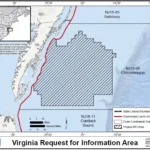
The federal government is once again testing how far it can push industrial extraction into
We rely on our members and donations to keep fighting for a sustainable tomorrow in marine conservation.

The Morning Blitz Cap. 100% of proceeds fund The Striper Project. Only 100 made. Don't miss out!
Shop The CapGIVE THE GIFT OF FISHERIES CONSERVATION THIS HOLIDAY SEASON. SHOP ASGA GOODS THAT FUND FISHERIES RESEARCH & ADVOCACY CAMPAIGNS
JOIN ASGA IN CALLING FOR CRITICAL MANAGEMENT ACTION AFTER YEARS OF SPAWN FAILURES & POOR MANAGEMENT.
By using this website, you agree to our use of cookies. We use cookies to provide you with a great experience and to help our website run effectively. To learn more, please review our privacy policy.
One Response
If I had to put it in terms my father would have understood, I might have said. “Pop, the sauce looks beautiful, but I think the pasta is a bit stale.”
What seems so incongruous to me is that the same administration wants to sell off national park land, promote data center construction and diminish the air quality standards for emission.
It seems to me that by necessity, an absolutely non-partisan board ( if one can be found), needs to be the ultimate arbitrator when working out the complicated logistics of such an all encompassing bill.