OFFICIAL ASGA ATLANTIC MENHADEN PRESS RELEASE
American Saltwater Guides Association Calls on ASMFC to Follow its Own Math and Implement a

The federal government is once again testing how far it can push industrial extraction into one of the most productive and sensitive stretches of ocean on the East Coast. The Bureau of Ocean Energy Management’s Request for Information (Docket BOEM-2026-0100) seeks interest in commercial leasing for Outer Continental Shelf minerals offshore Virginia — specifically heavy mineral sands and phosphorites in an area running roughly 3 to 63 miles off the Delmarva Peninsula, just north of the mouth of the Chesapeake Bay.
This is a bad idea, and it should be stopped before it advances any further.
The proposed area is not just another patch of seafloor. It sits at the gateway to the Chesapeake Bay and functions as a critical migration corridor and foraging ground for striped bass, Atlantic menhaden, and a host of other species that support both recreational and commercial fisheries. These waters are already under pressure from warming temperatures, shipping traffic, and other human uses. Adding industrial-scale dredging and sediment disturbance on top of those existing stresses is reckless.
Three core problems make this proposal premature and unwise.
First, the location is uniquely sensitive. Large-scale extraction of mineral sands would generate turbidity plumes, disturb benthic habitat, and risk disrupting the movement and feeding of migratory fish. The potential long-term effects on spawning success, juvenile survival, and forage availability are poorly understood and could be severe.
Second, too many fundamental questions remain unanswered. There is no commercial-scale heavy mineral sand mining experience in this specific environment under current ecological and regulatory conditions. We lack solid information on the duration and reach of sediment plumes, impacts on the benthic communities that support the food web, effects on fish behavior and larval survival, and cumulative impacts when combined with existing ocean stressors. Proceeding without comprehensive, independent baseline studies violates the principle of precautionary management that should govern public trust resources.
Third, the economic case is weak. It is far from clear that extraction in this location would generate returns large enough to justify the risk. Virginia’s recreational fishing, commercial fishing, and coastal tourism industries already produce substantial employment and tax revenue. Long-term damage to those sectors could easily outweigh any short-term mineral profits.
How to Submit a Comment
The public comment period has been extended through August 22, 2026.
Comments can be submitted online at: https://www.regulations.gov/document/BOEM-2026-0100-0001
When submitting, use a clear subject line such as: Opposition to BOEM RFI for Commercial Leasing of Outer Continental Shelf Minerals Offshore Virginia (Docket BOEM-2026-0100)
BOEM should not move this process toward a lease sale. At a minimum, the agency must require rigorous, independent environmental and economic analyses before taking any further steps. The burden of proof belongs on those who want to industrialize this area, and that burden has not been met.
The waters off Virginia’s Eastern Shore and the approaches to the Chesapeake Bay are too important to treat as an experiment. BOEM should reject commercial leasing in this area and protect one of the most valuable fishery habitats on the Atlantic coast.
American Saltwater Guides Association Calls on ASMFC to Follow its Own Math and Implement a

“Too Long, Didn’t Read”: There was an Executive Order on saltwater fishing last week. Executive
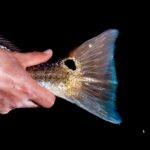
There are several videos doing the rounds on social media lately about stocking redfish into
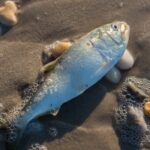
ASMFC released Draft Addendum II to Amendment 3 of the Atlantic Menhaden Interstate Fishery Management
We rely on our members and donations to keep fighting for a sustainable tomorrow in marine conservation.

The Morning Blitz Cap. 100% of proceeds fund The Striper Project. Only 100 made. Don't miss out!
Shop The CapGIVE THE GIFT OF FISHERIES CONSERVATION THIS HOLIDAY SEASON. SHOP ASGA GOODS THAT FUND FISHERIES RESEARCH & ADVOCACY CAMPAIGNS
JOIN ASGA IN CALLING FOR CRITICAL MANAGEMENT ACTION AFTER YEARS OF SPAWN FAILURES & POOR MANAGEMENT.
By using this website, you agree to our use of cookies. We use cookies to provide you with a great experience and to help our website run effectively. To learn more, please review our privacy policy.
3 Responses
this project is dumb stop it
250 years America has been an organized country and in that time we have, in a very determined fashion, very nearly RUINED the natural environment. We have polluted rivers, lakes and streams, demolished entire mountains for their coal and metals,we have brought many speciesof both fish and animals to extinction and some to the edge and back.
We seem to have Learned nothing from this long history of TAKING, TAKING and More, More, More.
It is time to Evaluate, time to use our intelligence AHEAD of the disaster rather than after it.
Undersea mining is a very poor idea with a half asset plan to do it.
I say Emphatically, NO!
Progress does not only mean moving forward. Progress can also mean to maintain the stasis quo or more importantly not move forward with a project. Undersea mining should not be allowed under any circumstances. We don’t need the minerals that badly that we need to ruin the oceans as well. We are already doing that anyway